
Overview
SYNCRONIC addresses the process that supports bidirectional data flows between physical and digital twins, examining the non-functional performance of DTs. The primary objective is to explore theories, methods, and technologies for the digital coupling process.
While significant attention has been given to constructing models that accurately represent a system’s behavior, there is a need for studies focusing on the non-functional performance attributes of digital twins (DTs), such as reliability, maintainability, security, and connectivity.
Establishing a closed-loop process between a physical system and its digital twin generally assumes continuous observation or measurement of the system’s full state. However, this assumption becomes less reliable when communication networks or buses are involved, whether linking the sensors to the twin or the twin to the actuators. The main challenge is to define and verify the necessary conditions, such as data freshness, availability, reliability, and security, that ensure accurate execution of digital twin models and real-time synchronization with the physical world. Efficient synchronization also brings to the forefront critical questions about emerging technologies like IoT, 6G networks, and the Cloud-Edge continuum—particularly how they can address constraints such as latency, precision, and efficiency (e.g., through data compression).
Designing a data collection strategy for digital twins (Smart data) presents a significant challenge and involves multiple dimensions: balancing data collection with twin requirements, determining the optimal sensor placement, minimizing energy consumption, and ensuring high-quality data collection. While data is important, maintaining the link between the data and its context is crucial. Identifying metadata models required by digital twins and how metadata can be produced and used to help managing models are open questions.
Maintaining synchronization between the digital twin and its physical counterpart, particularly in dynamic environments where conditions change frequently, requires either the consistent and accurate integration of real-world data into the digital model (data assimilation) or the adjustment of the digital twin’s state at specific intervals by delaying, triggering, or rolling back the effects of events within the model (complex event processing). However, implementing this is highly challenging due to the complexity of nonlinear, multiscale, and multiphysics phenomena involved in complex systems, which are often tied to computationally intensive simulations. Achieving effective sequential data assimilation and control through artificial intelligence (AI) methods—such as deep learning—that combine both physical models and data-driven algorithms remains an open challenge.
The project focuses on smart data collection, synchronization, adaptation and control, and network optimization with clear objectives: developing comprehensive frameworks for efficient data utilization, establishing real-time synchronization methods, creating adaptive control mechanisms, and implementing network co-optimization for scalable deployment.
Associated Use Cases
Use cases in PC4 require complex systems or systems operating under fluctuating environmental and operational conditions, necessitating real-time monitoring and dynamic adjustments. Secure and safe integration within a continuum computing environment is also critical.
Investigator & Project Partners
Principal Investigator:
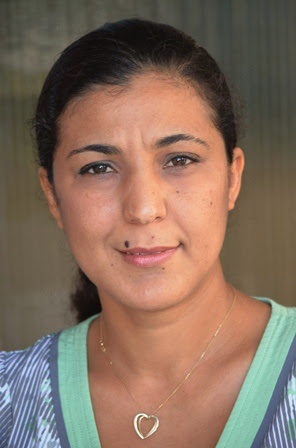
Hind Bril El Haouzi
Full Professor at Université de Lorraine
Hind Bril El Haouzi is a full Professor at the Université de Lorraine where she teaches and conducts research in the fields of Computer Engineering and Production Management Control. Since 2018, she has been co-leading the Sustainable Industrial System Engineering Research group at the (CRAN,CNRS) Laboratory. She obtained her PhD in Computer Science, Automatic Control, and Production Engineering in 2008. She has a wealth of industrial experience, having worked for many years as a digitization project leader before joining Université de Lorraine. She currently coordinates several collaborative projects with the industrial sector that focus on the challenges of digital transformation and the societal transition of industry (ANR PRCE, ADEME, CPER,CIFRE…). Her research interests include modeling and control of cyber physical production systems, with a focus on digital simulation and distributed manufacturing control. She has published over 100 papers in international conferences and journals.
Participating Partners:


Project Implementation
The project is structured into three complementary work packages, covering the essential dimensions of the coupling between the physical system and its digital twin: frugal data collection and optimal network deployment, spatio-temporal synchronization and verification, as well as adaptation and control based on real-world data. This organization is intended to ensure reliable, secure, high-performance, and resource-efficient exchanges between the physical world and its digital counterpart.
Workpackage1: Frugal Data Collection Strategies and Network Infrastructure Configuration
Leader: ICube (Université de Strasbourg, CNRS) Partners: Maracas (Inria), Agora (Inria), CRAN (UL/CNRS) Objectives: This workpackage aims to define frugal strategies for data collection, transmission, and processing in order to support reliable and resource-efficient coupling of the digital twin. The challenge is to optimize data flows and network usage in distributed systems while ensuring scalability and sustainability of deployment across the IoT–Edge–Cloud continuum. Key Tasks:
- Optimal sensor selection and placement
- Minimization of energy costs and data volumes
- Integration of metadata and contextualization of measurements
- Development of frugal data collection and transmission strategies
- Co-optimization of digital twin requirements and the underlying network infrastructures
Workpackage2: Synchronization Conditions and Spatio-Temporal Verification
Leader: Kopernic (Inria)
Partners: LIG (Université Grenoble Alpes), GREAH (Univ. Le Havre Normandie), CRAN (Université de Lorraine), Loria (Inria)
Objectives: This work package aims to establish the scientific, methodological, and technological foundations required to ensure reliable synchronization between the physical system and the digital twin. It focuses more specifically on temporal and behavioral validation, multi-level spatio-temporal consistency across models, as well as runtime monitoring.
Key Tasks:
- Define synchronization conditions and convergence criteria
- Develop temporal and spatial verification techniques
- Implement security monitoring and runtime verification
- Create automatic proof mechanisms for non-functional properties
Workpackage3: Digital Twin Adaptation and Control
Leader: ENS Paris-Saclay (LMT))
Partners: École Polytechnique (ANANKE), LS2N (Université de Nantes), Aniti (Université de Toulouse), CRAN (Université de Lorraine)
Objectives: This work package focuses on the development of adaptive digital twins capable of continuously aligning with data from the real world. It relies on hybrid modeling, data assimilation, and optimal control, combining physics-based approaches with AI-driven methods in order to ensure real-time adaptability and consistency between physical and digital systems.
Key Tasks:
- Develop data assimilation techniques for model updating
- Implement AI-driven model enrichment and adaptation
- Create dynamic data-driven simulation approaches
- Design complex event processing for real-time state adjustment
Related publications
Engineering Digital Twins: A Research Roadmap
Benoît Combemale, Pascale Vicat-Blanc, Arnaud Blouin, Hind Bril El Haouzi, Jean-Michel Bruel, Julien Deantoni, Thierry Duval, Sébastien Gérard, Jean-Marc Jézéquel • 2025
Conference Paper • EDTconf 2025 - 2nd International Conference on Engineering Digital Twins
Model‐Driven Engineering for Digital Twins: Opportunities and Challenges
Judith Michael, Loek Cleophas, Steffen Zschaler, Tony Clark, Benoît Combemale, Thomas Godfrey, Djamel Eddine Khelladi, Vinay Kulkarni, Daniel Lehner, Bernhard Rumpe, Manuel Wimmer, Andreas Wortmann, Shaukat Ali, Balbir Barn, Ion Barosan, Nelly Bencomo, Francis Bordeleau, Georg Grossmann, Gabor Karsai, Oliver Kopp, Bernhard Mitschang, Paula Muñoz Ariza, Alfonso Pierantonio, Fiona Polack, Matthias Riebisch, Holger Schlingloff, Markus Stumptner, Antonio Vallecillo, Mark van den Brand, Hans Vangheluwe • 2025
Journal Article • Systems Engineering
Modeling and Digital Twins: Insights and Strategies for Software Engineers
Silvia Abrahão, Miroslaw Staron, Judith Michael, Benoît Combemale, Marsha Chechik • 2025
Journal Article • IEEE Software
Related positions
Iterative design of Socio-technical system Digital TWINs by AI-Augmented process mining
-
- Fluency in English and French
Monitoring and Verification of Applications involving Digital Twins.
-
- Fluency in English and French
Location-aware digital twins for wireless communication networks
This post-doctoral contract develops location-aware digital twins of wireless communication networks, using self-supervised channel charting to derive location information directly from existing communication signals.
- PhD in digital communications, machine learning or signal processing
- Familiarity with self-supervised machine learning
- +2 more requirements
Ongoing Research Positions
Frugal and AI-Enhanced Data Governance for Reliable Digital Twins
Brief summary of the position and research focus
Digital Twins for Wireless Networks
This PhD investigates the design of digital twins for wireless networks, aiming to develop frugal data collection and closed-loop control mechanisms that translate predictions into actionable adaptations within low-power wireless systems.